
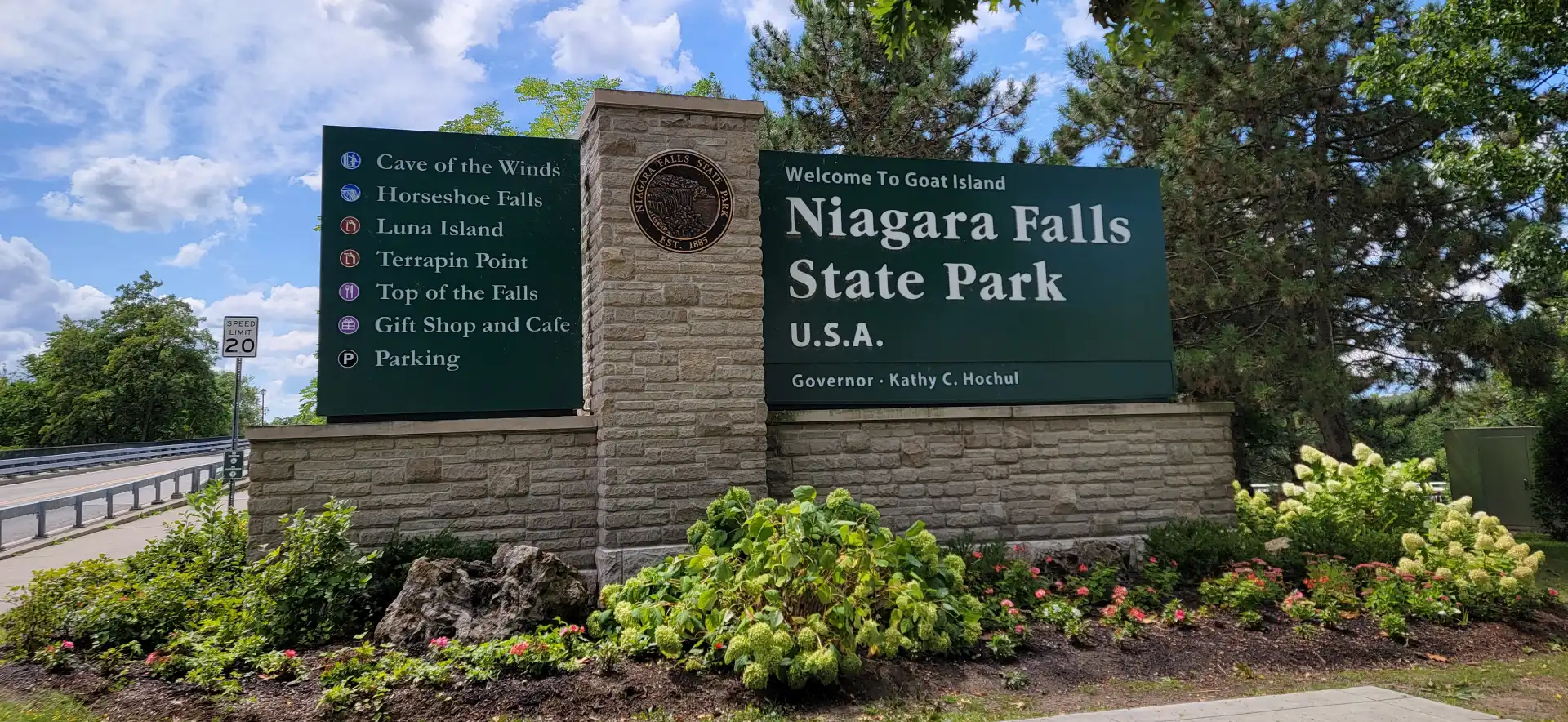
About Niagara Falls State Park
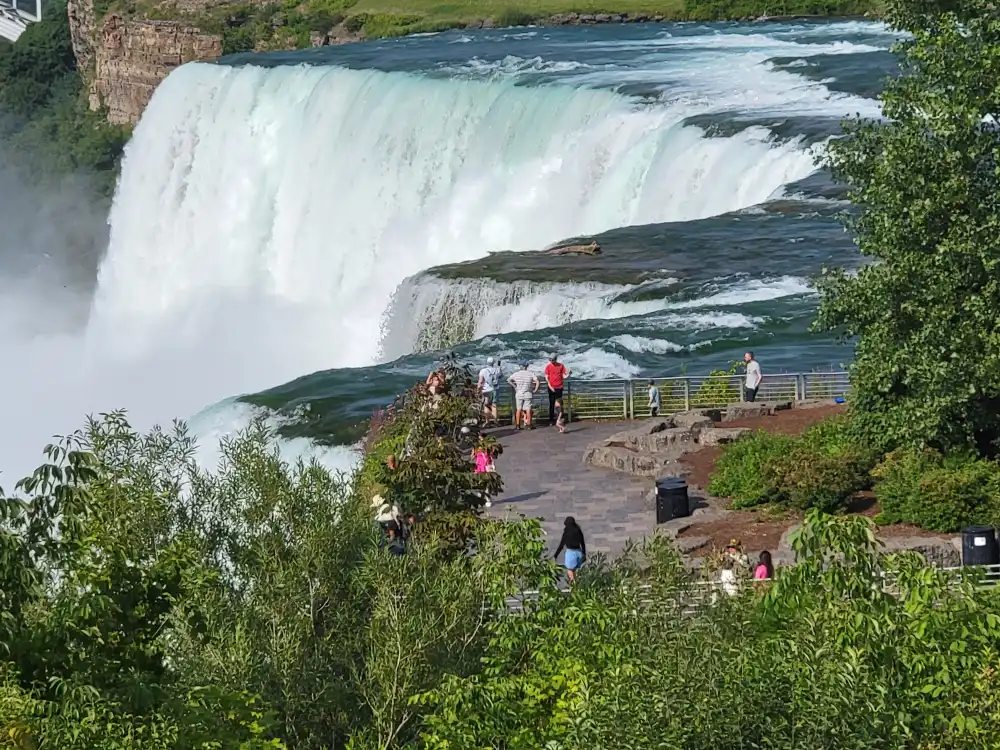
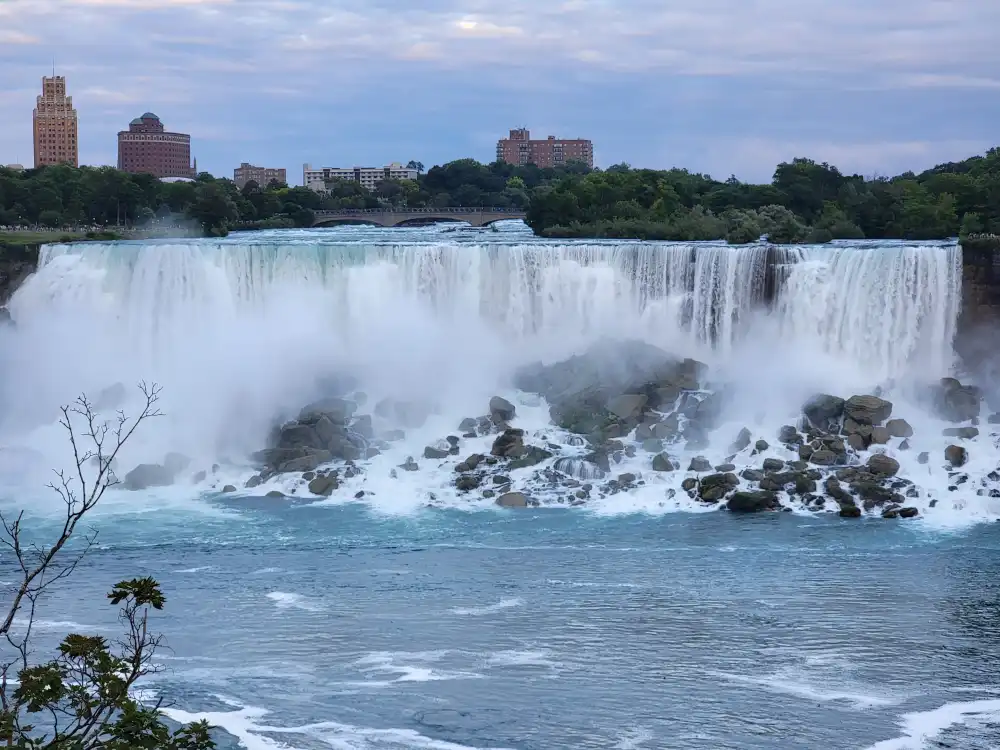
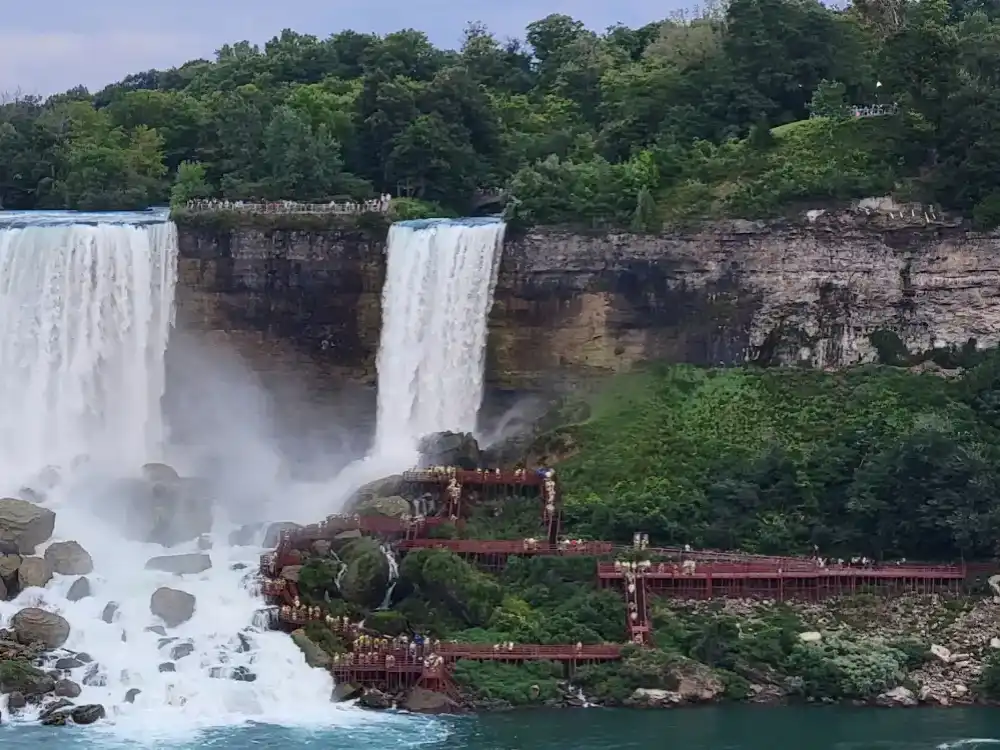
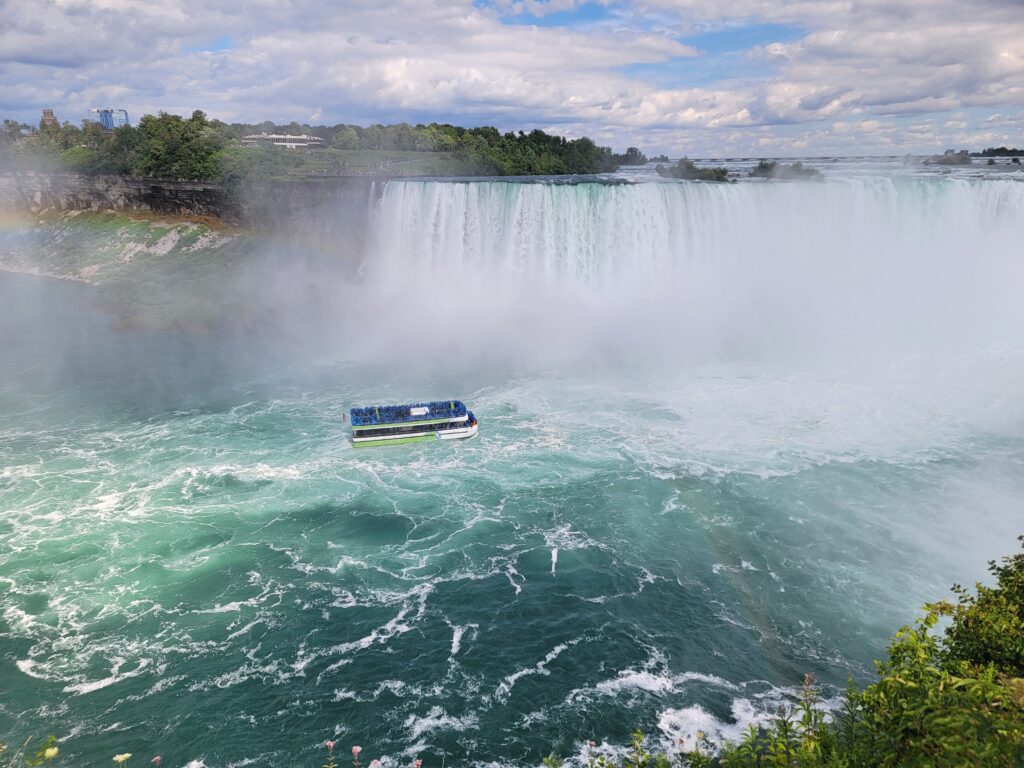
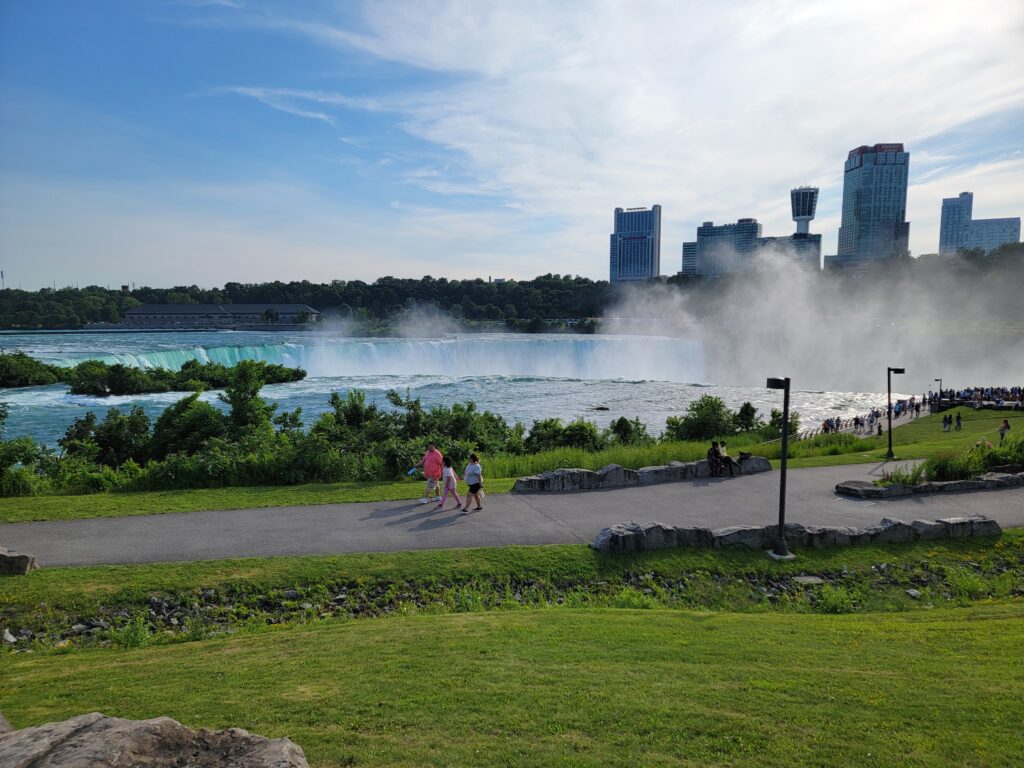
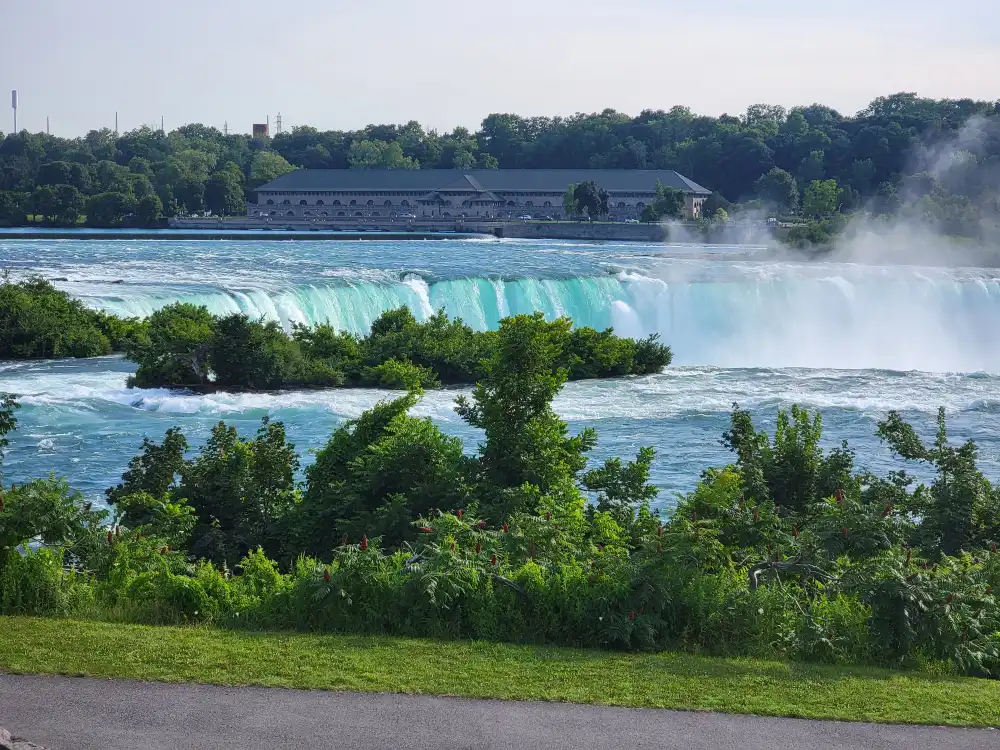
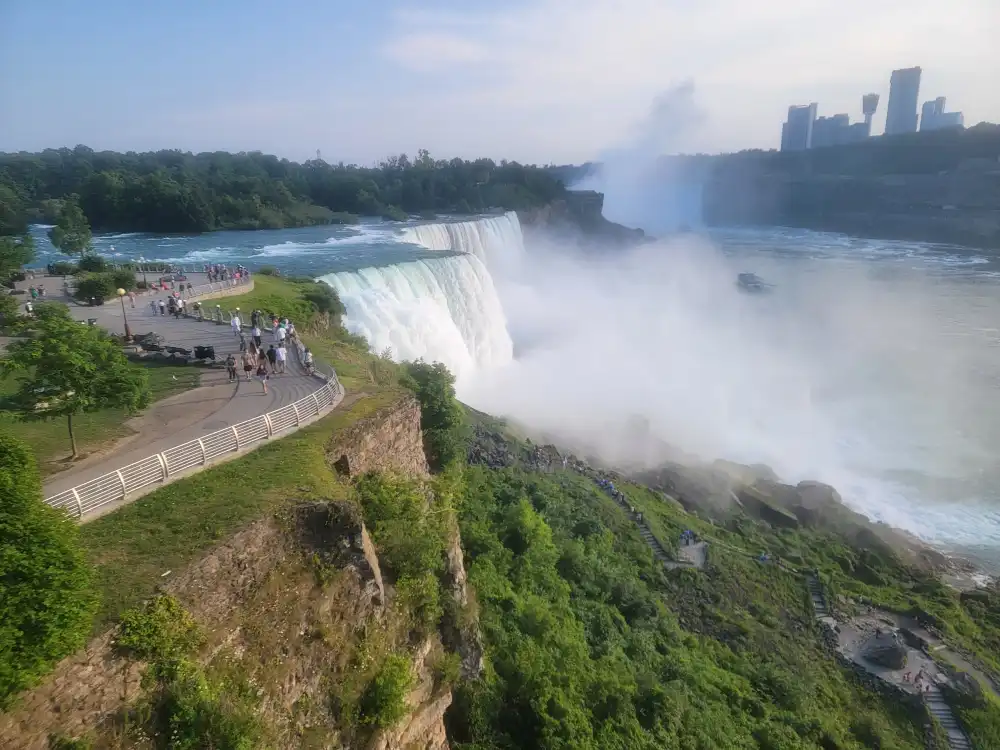
Niagara Falls State Park, established in 1885 as the oldest state park in the United States, spans over 400 acres and offers unparalleled access to the natural beauty and power of Niagara Falls. The park is home to the three iconic waterfalls—American Falls, Bridal Veil Falls, and part of the Horseshoe Falls—as well as a variety of attractions and facilities designed to help visitors experience the falls up close.
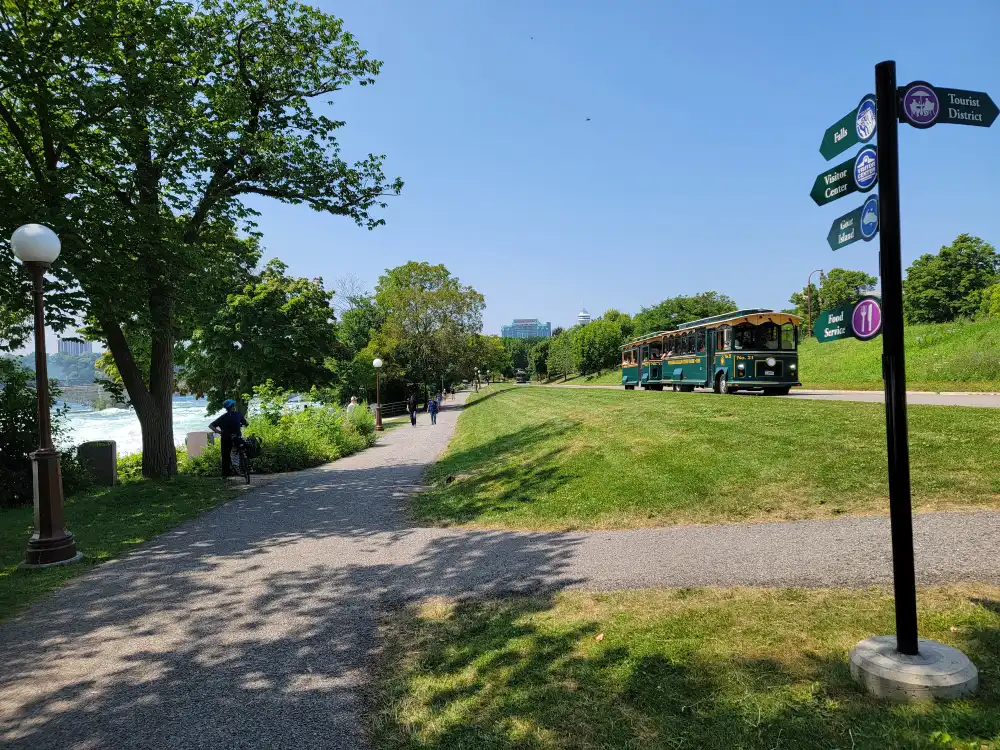
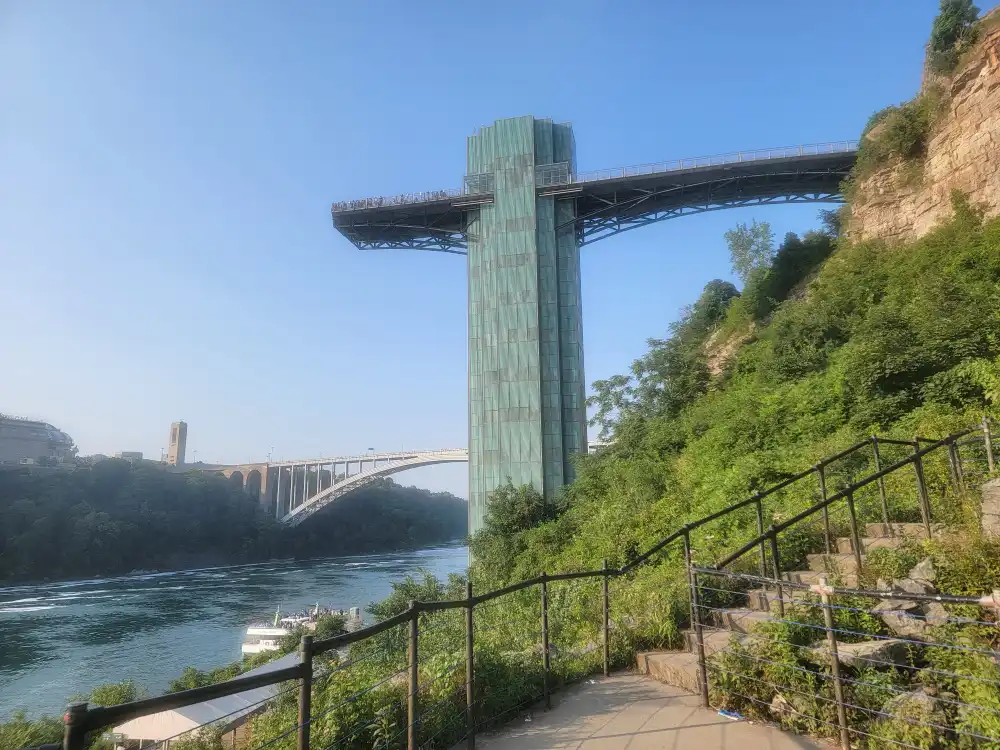
Key features of Niagara Falls State Park include scenic walking paths, landscaped gardens, observation points like the Prospect Point Observation Tower, and popular attractions such as the Maid of the Mist and Cave of the Winds. The park also includes visitor centers, souvenir shops, the Top of the Falls Restaurant, and picnic areas, all interconnected by the Niagara Scenic Trolley.
There is no cost to enter the park and view the falls, and there are many free activities available for visitors. However, there are parking fees, as well as ticket/admission fees for several of the most popular attractions.
With its combination of natural wonders and well-maintained public spaces, Niagara Falls State Park serves as both a breathtaking destination and a welcoming hub for millions of travelers each year.
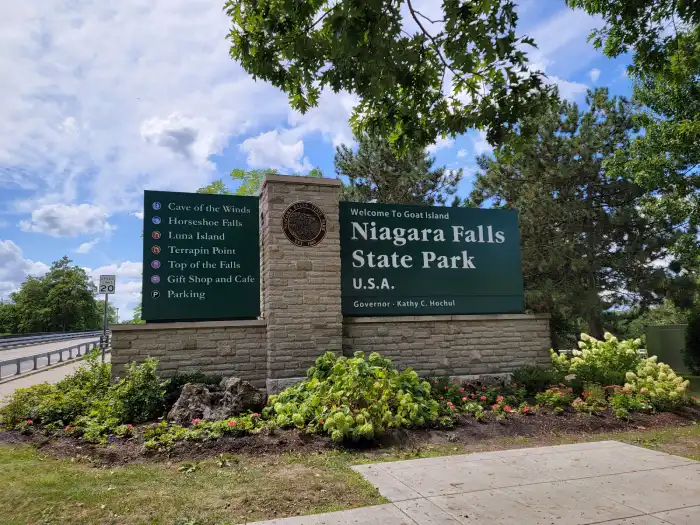
Niagara Falls State Park Hiking
Explore all of the beauty beyond the Falls on one of the many Niagara Falls hiking trails.
From touring the ruins of the first hydroelectric power station, to hiking some of the best trails in the country, Niagara Falls is action-packed. Here are some of the things you can explore on your visit to the Niagara Falls Gorge:
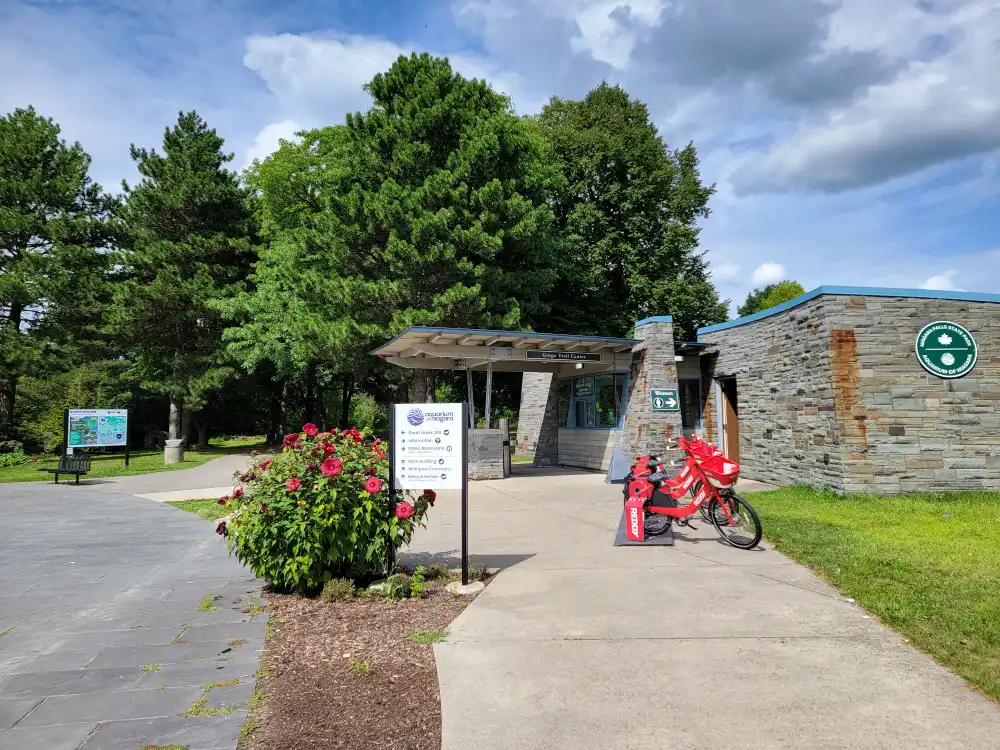
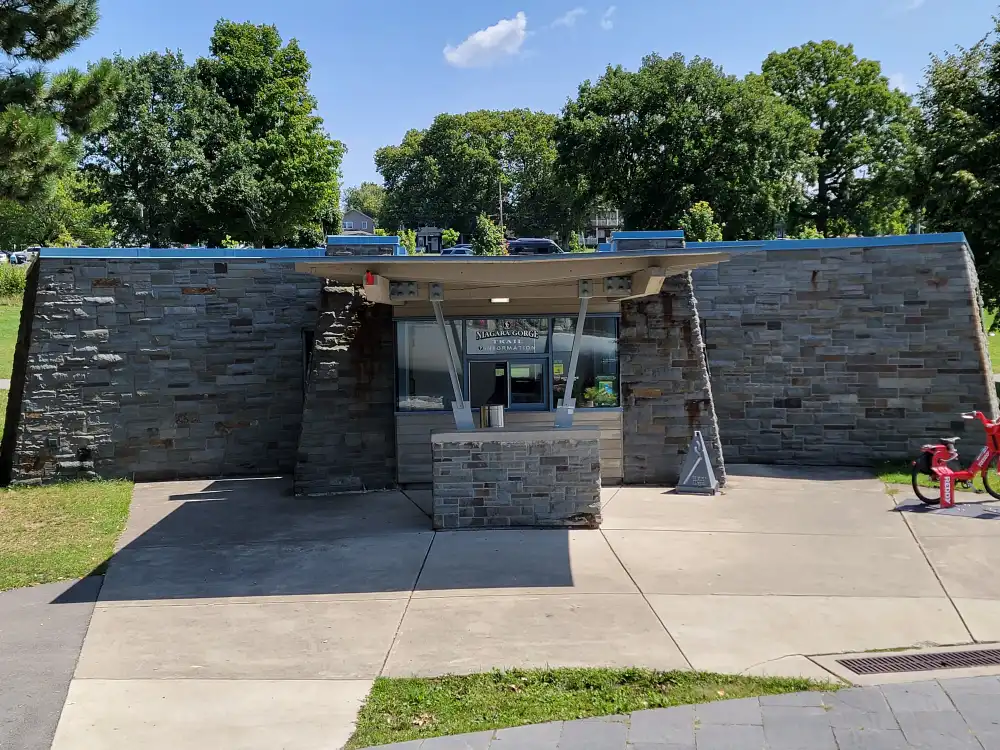
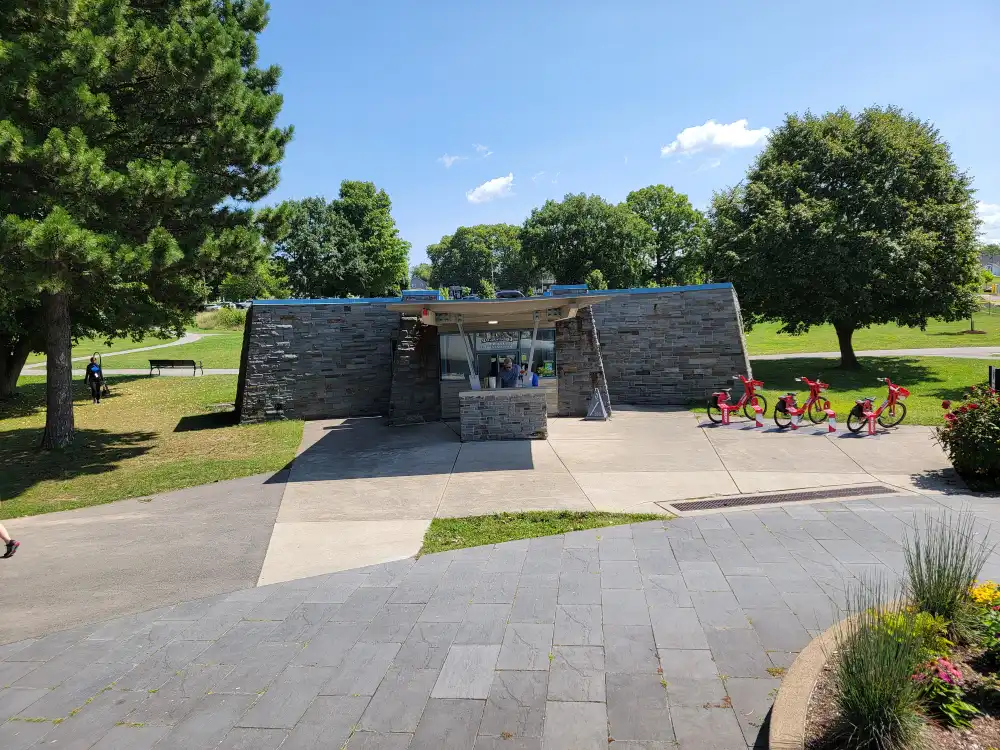
Niagara Gorge Trailhead Center
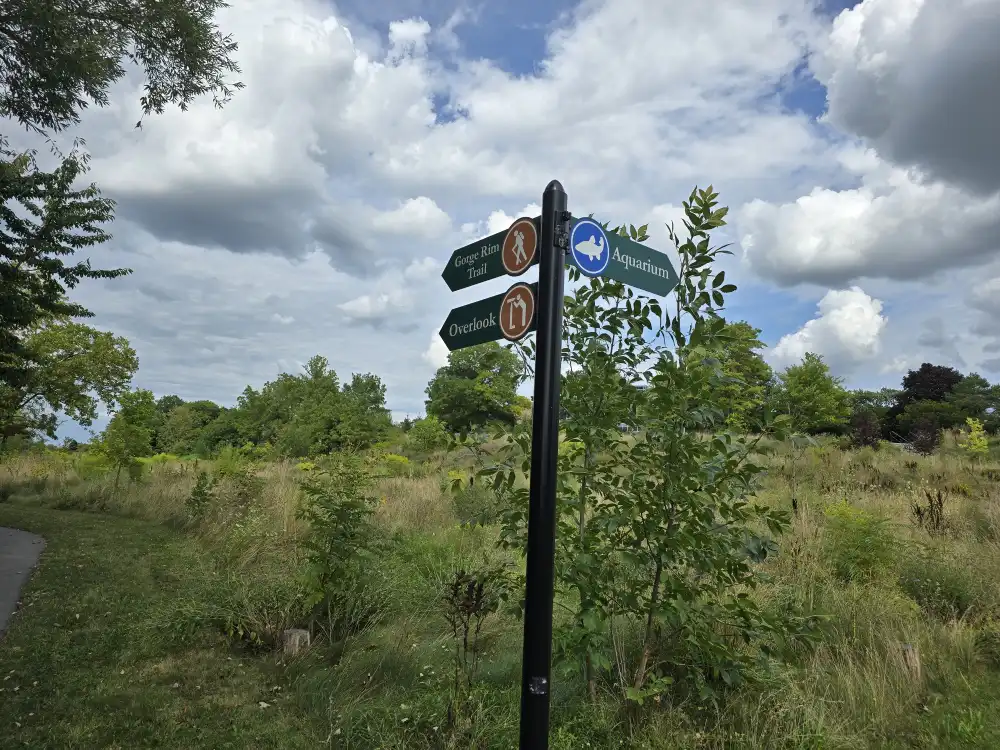
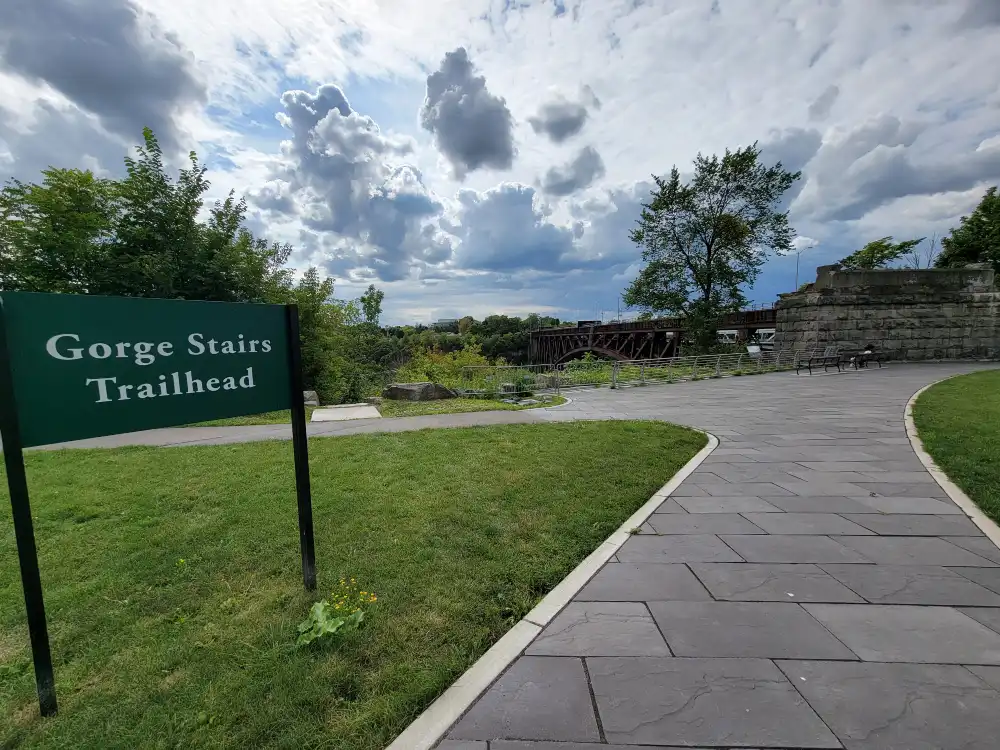
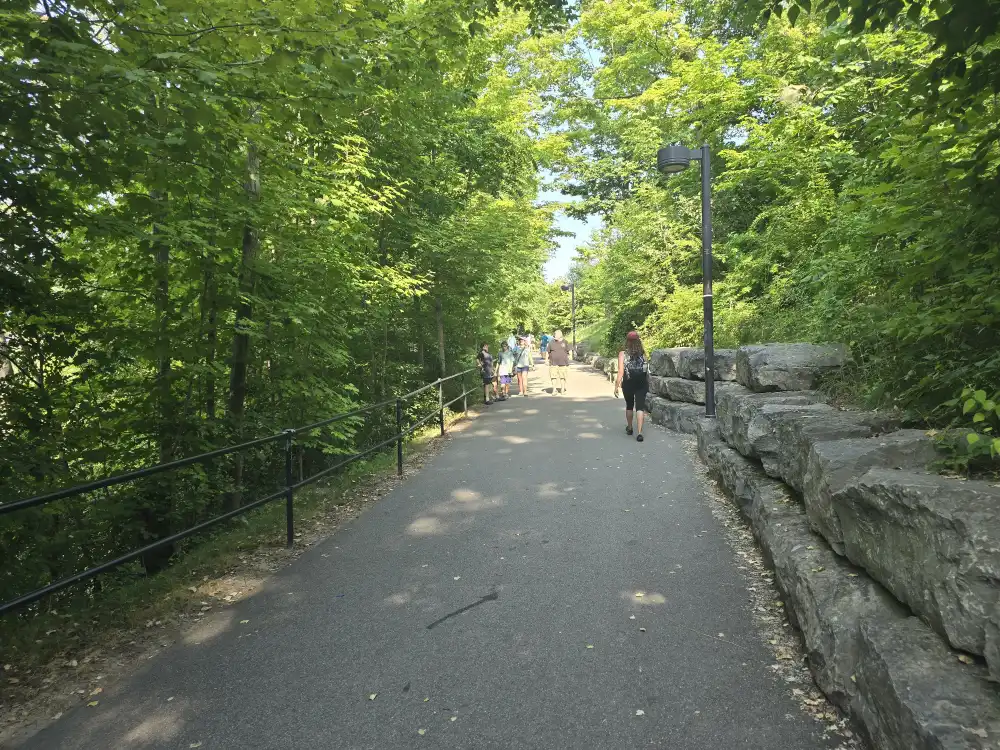
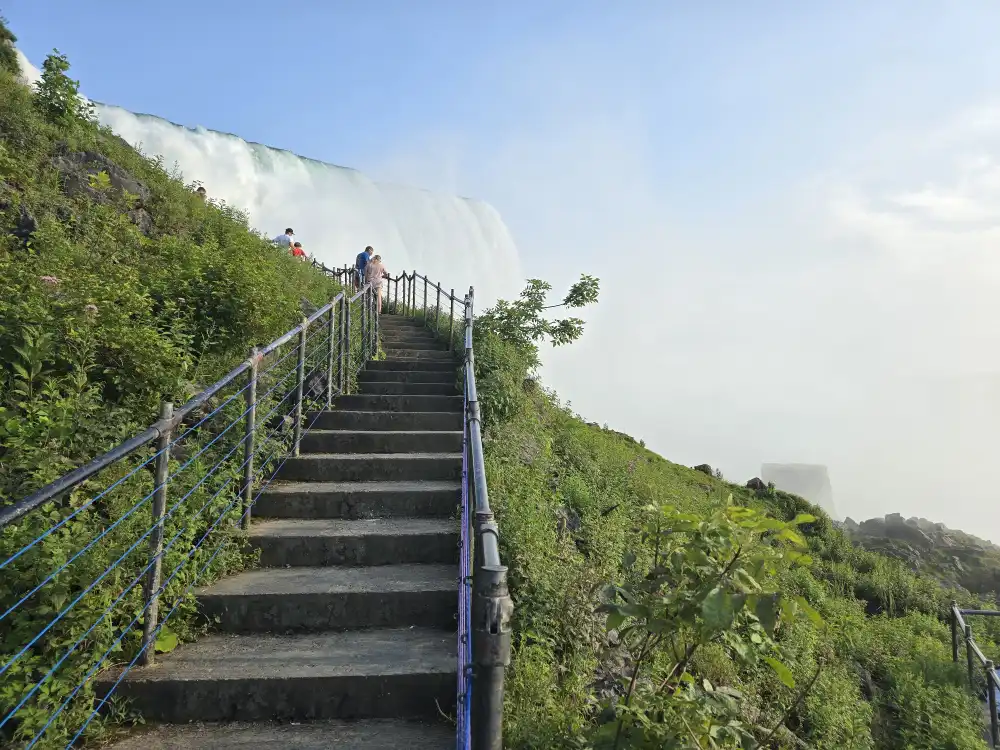
The Niagara Gorge hiking trails all begin at the Niagara Gorge Trailhead Center, the gateway to some of the best hiking and biking trails in the region. The local Gorge Trail System offers both easy trails to follow and challenging sections of trails that have steep stairs to climb and rocks to scramble over. Please be aware that conditions are ever-changing in the Niagara Gorge, and hikers should be prepared with sturdy footwear as well as water. Hikers MUST stay on marked trails and avoid entering the water.
Guided Niagara Gorge hiking tours are offered mid-May through October.
Call 716-282-5154 for group rates and information. Please note that there is a five-person minimum for tours.
Great Gorge Scenic Overlook Hike
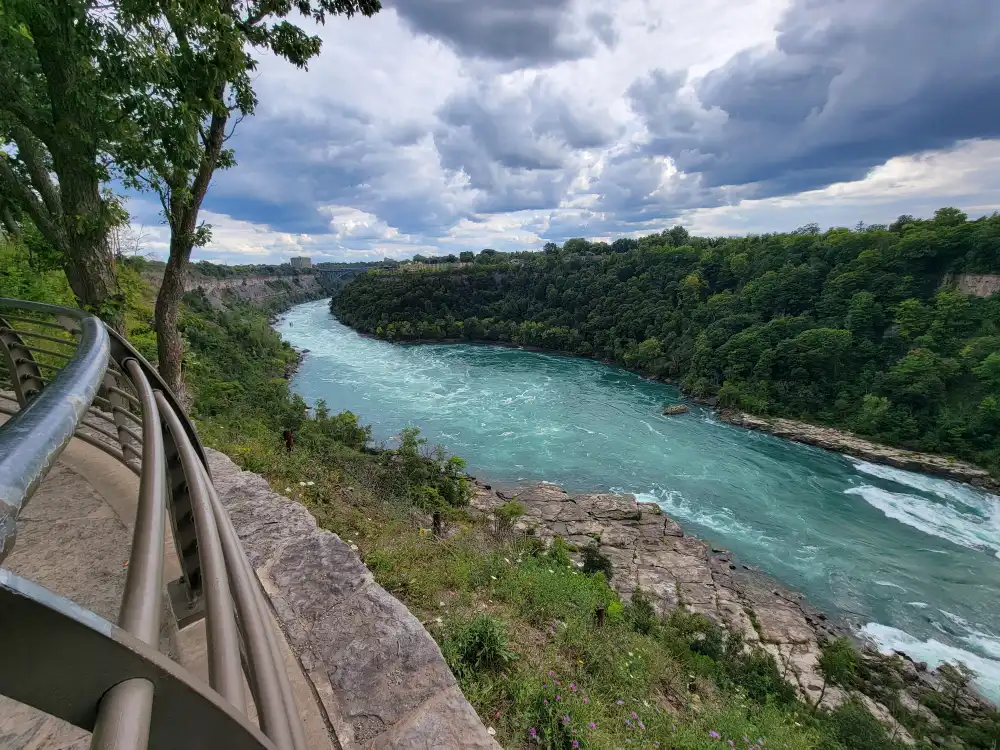
This easy, one-hour round trip hike begins at the Trailhead Building. There is no age requirement for this trail, and is recommended for beginners.
Upper Great Gorge Hike
Another great trail for beginners, this easy, two-hour round trip hike begins at the Trailhead Building and follows the Great Gorge Railway Trail. There is no age requirement for this trail.
Niagara Gorge Trail
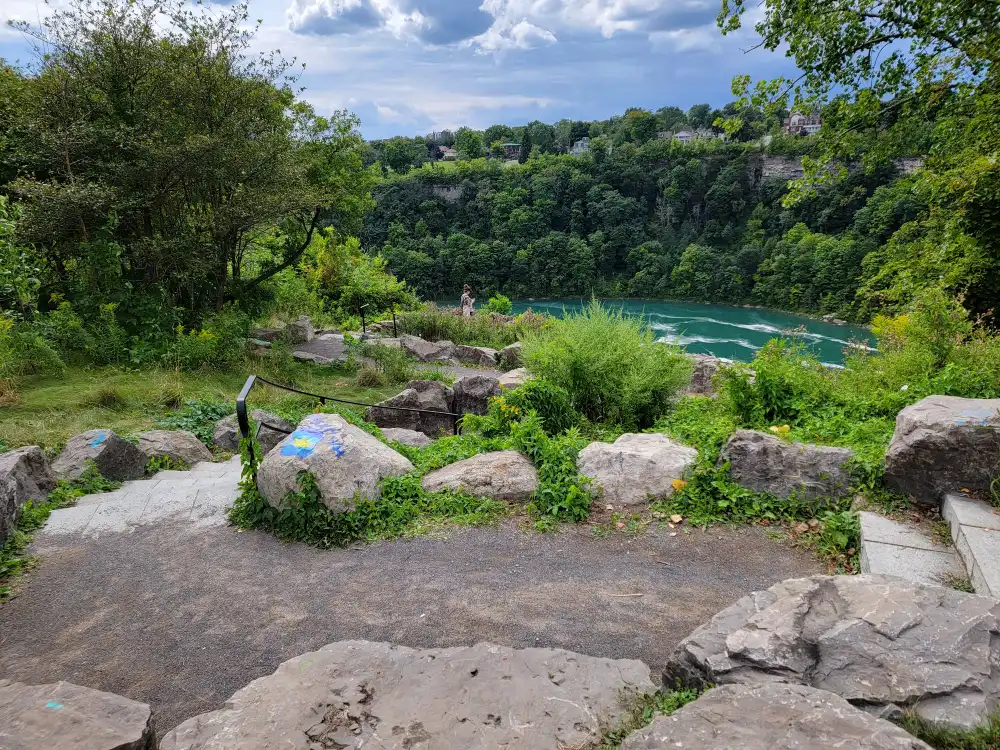
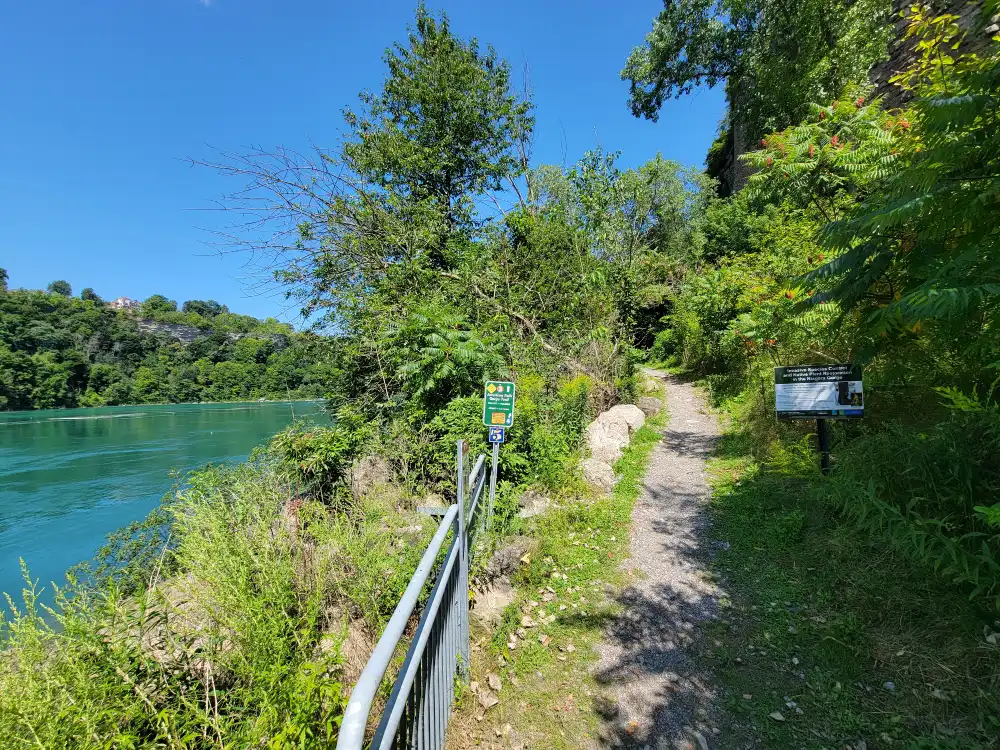
The most popular trail is the Niagara Gorge Trail, which starts near the base of the Schoellkopf Power Plant ruins. This trail takes you along the edge of the gorge, providing stunning views of the American Falls and the Bridal Veil Falls from various vantage points. The trail is well-maintained and offers a relatively easy hike, making it accessible to most visitors. Along the way, interpretive signs provide information about the geology, history, and ecology of the area, enhancing the hiking experience.
Devil’s Hole Rapids and Giant Rock
As a more moderate trail, guests hiking Devil’s Hole Rapids and Giant Rock must be at least 8 years of age. The trail begins at Devil’s Hole State Park and is a moderate level 2.5-hour hike round trip.
Whirlpool Rapids Adventure Hike
One of the most challenging trails that Niagara Falls State Park has to offer, the Whirlpool Rapids Adventure Hike is recommended for experienced hikers, who are at least 8 years of age. The trail begins at Whirlpool State Park, and is a three-hour hike round trip, where you can expect some boulder hopping.
Schoellkopf Power Plant Ruins
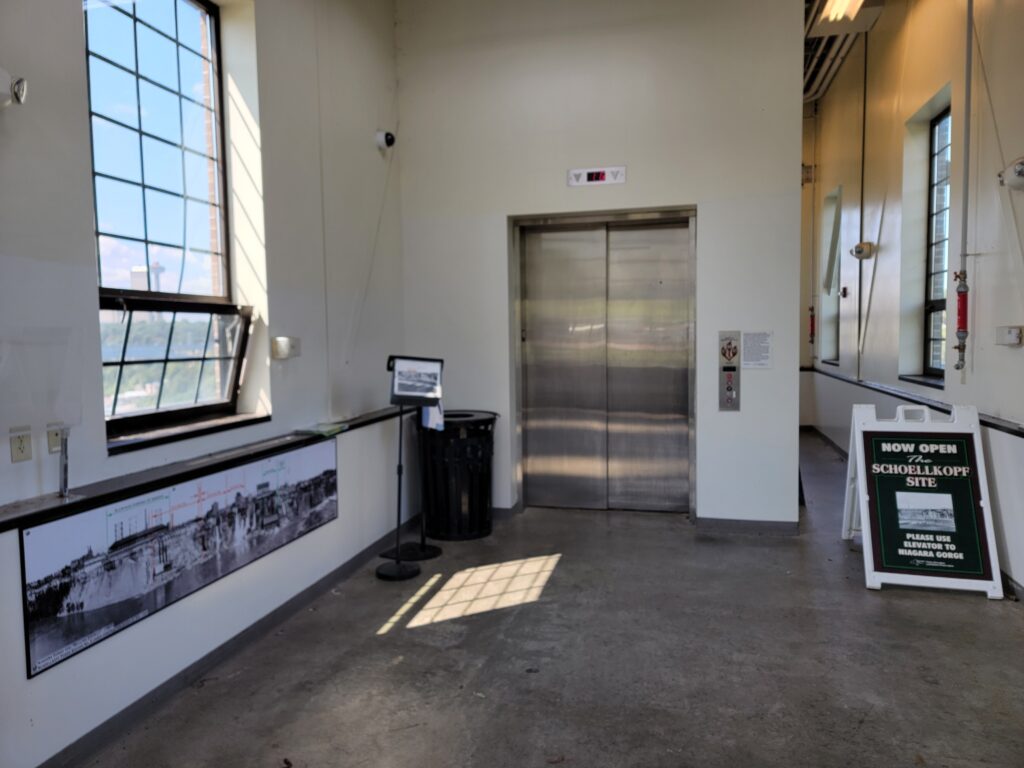
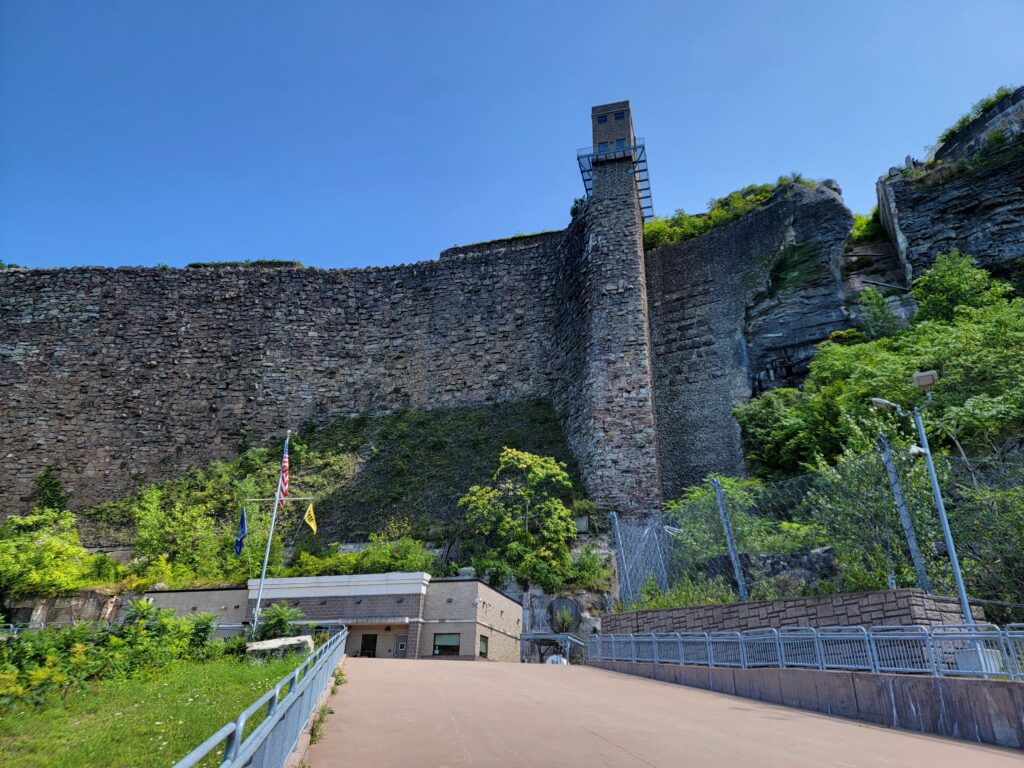
Take an elevator into the Niagara Gorge to discover the remains of the former Schoellkopf Power Plant.
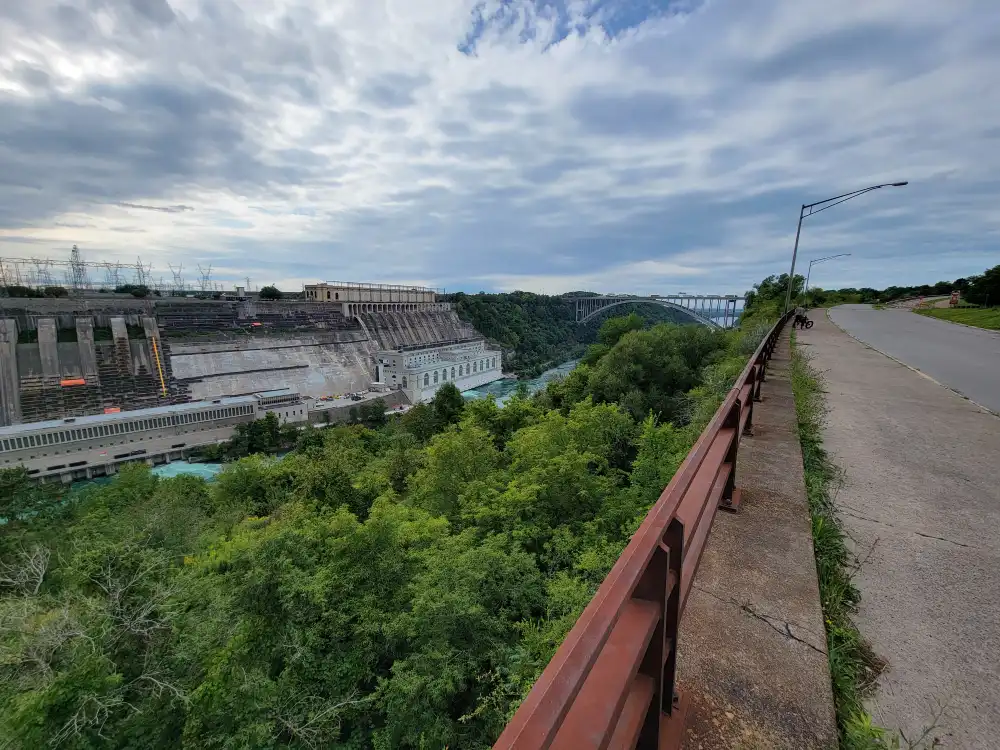
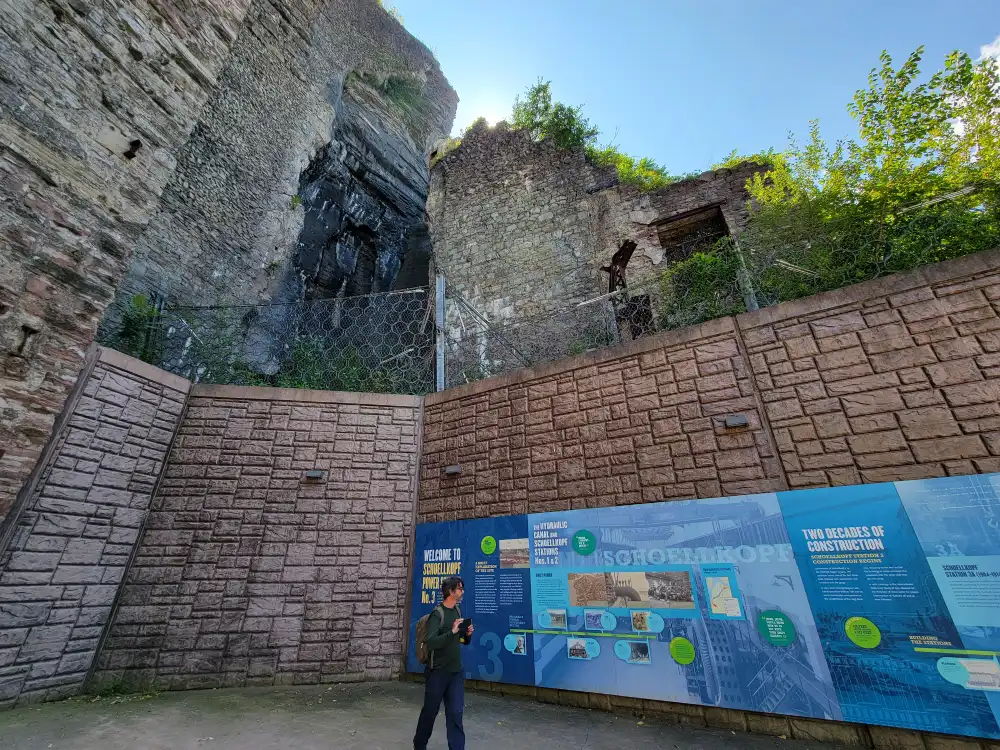
The Schoellkopf Power Station was constructed in three sections between 1905 and 1924, and at the time of its completion was the largest hydroelectric power station in the world. The complex included offices, gatehouses, and other buildings at the top of the Niagara Gorge, and turbine-generator stations located at the base. Water was diverted from the Niagara River above the falls, by a 4,600′ canal that ran through the city to the edge of the gorge.
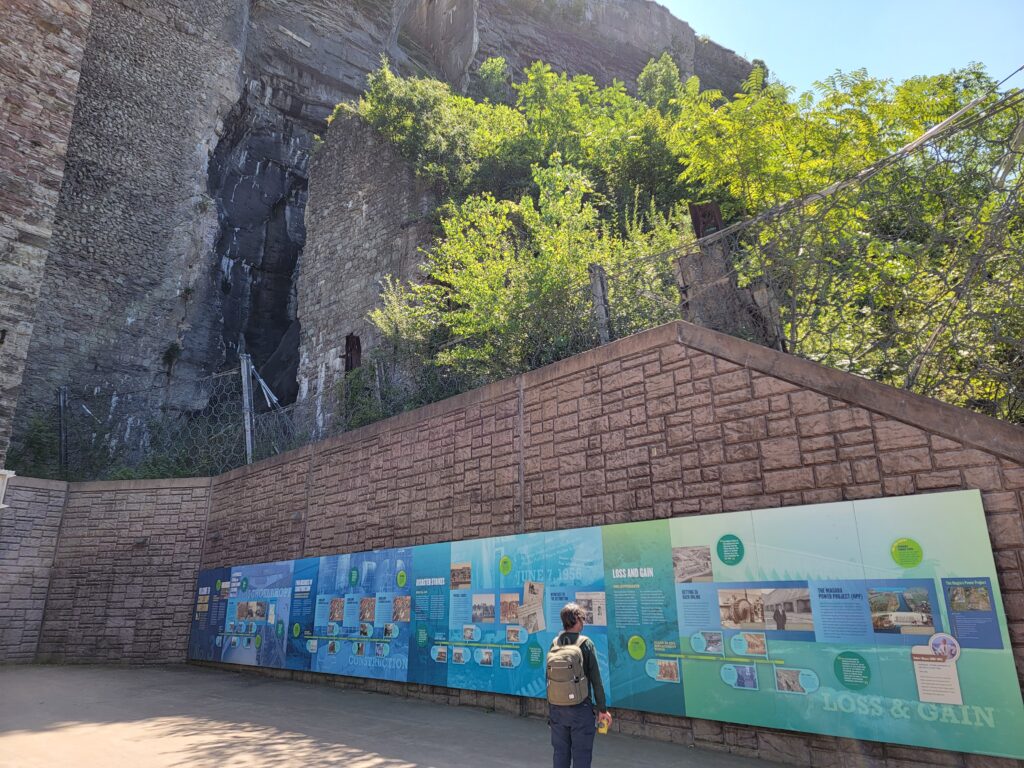
On the morning of June 7, 1956, workers noticed water seeping into the plant from the back wall. By mid-afternoon, the cracks in the rear wall were widening while 40 men worked with sandbags to stop the flow of water.
At 5:00 PM, the Schoellkopf Power Station sustained a catastrophic collapse which destroyed two thirds (2/3) of the plant. Six generators capable of producing 322,500 horsepower had been demolished. Damage was estimated at $100 million dollars. The most devastating was the sudden loss of 400,000 kilowatts of power from the power grid. Suddenly, a loud rumble was heard from behind the wall, and the wall began to collapse. One of the workers, Richard Draper of Lewiston, was killed. The rest escaped unscathed. The entire southern portion of the plant collapsed into the river below. As the generators blew apart, some debris was propelled to the Canadian side of the gorge.
In 2013, the Maid of the Mist began construction on the site as a location to store their boats during the harsh winter months. As part of that project, the original elevator shaft was restored and elevator access to the Gorge and the Schoellkopf site was granted.
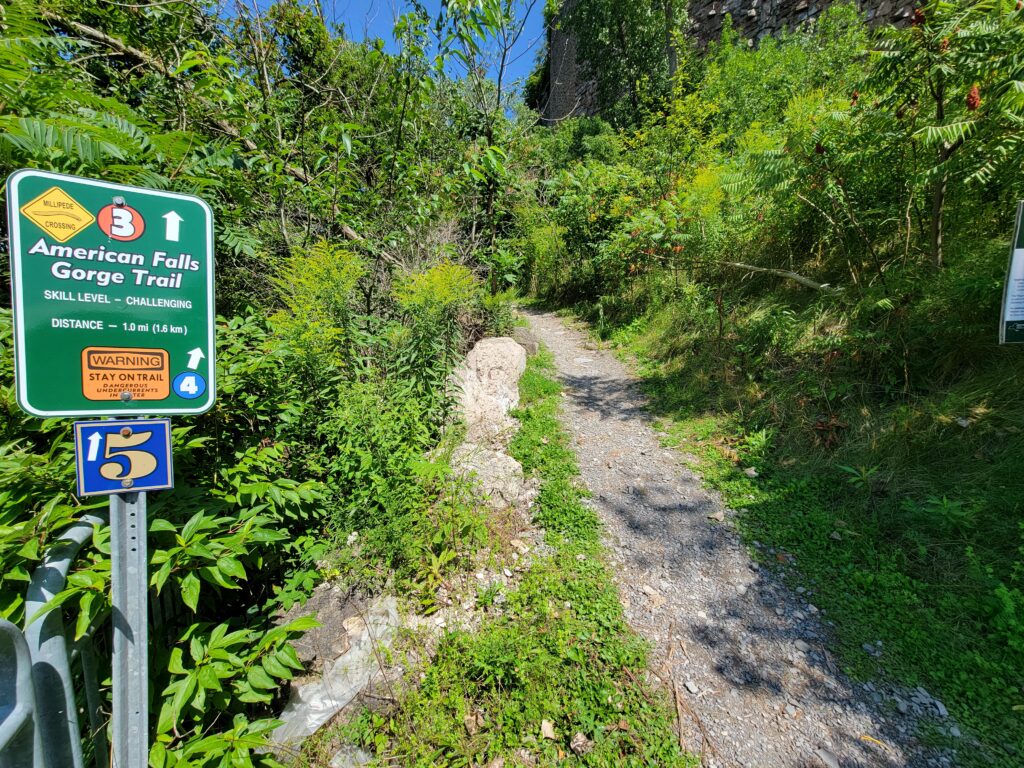
At the base of the Schoellkopf Power Plant ruins, visitors can embark on a series of scenic hikes that offer closer views of the falls and the surrounding gorge. The Schoellkopf Power Station Trail is a moderate 0.8 mile long trail. The American Falls Gorge Trail (Niagara Gorge Trail) is most popular, though, as this scenic path follows the edge of the gorge, offering breathtaking glimpses of both the American Falls and Bridal Veil Falls from several lookout points. The trail is in good condition and generally easy to navigate, making it suitable for hikers of most skill levels. Informative signs along the route share fascinating details about the region’s geology, natural environment, and historical significance, adding depth to the journey.
There is no cost to ride the elevator and it is open seasonally.
2025 Elevator Schedule
May 7 – October 31: 7:30 AM – 5:00 PM Daily
Schedule subject to change.
Park Programming & Events
Niagara Falls State Park offers a variety of seasonal programming and events that enhance the visitor experience and celebrate the natural and cultural heritage of the area. These events include guided nature walks, educational talks by park naturalists, historical reenactments, and family-friendly activities like outdoor movie nights and crafts for kids. During the summer, special events such as concerts and cultural festivals often take place on Old Falls Street or near the park’s main gathering areas. These programs provide engaging ways for guests to connect with the park’s history, ecology, and community spirit while enjoying the stunning surroundings.
Find Niagara Falls State Park free programming events at https://parks.ny.gov/events/event-results.aspx?pk=46 .
Find more events at https://www.eventbrite.com/o/niagara-region-park-interpretive-programs-team-64464644703 .
History Of Niagara Falls State Park
Niagara Falls State Park has a rich history that dates back to the early 19th century. The natural beauty and power of the falls have attracted visitors for centuries, and efforts to preserve and protect the area have been ongoing for over 200 years.
Early Exploration and Tourism
The first known European to document Niagara Falls was French explorer Samuel de Champlain, who described the falls in 1604. In the 18th and early 19th centuries, the falls became a popular destination for travelers and adventurers. Early visitors included notable figures such as John Adams, Thomas Jefferson, and Charles Dickens.
Establishment of the state park
By the mid-19th century, industrial development and commercialization threatened the natural beauty of Niagara Falls. In response, a group of concerned citizens, led by landscape architect Frederick Law Olmsted, advocated for the creation of a state park to protect the falls. Their efforts were successful, and in 1885, New York State established the Niagara Reservation, making it the first state park in the United States. The park was later renamed Niagara Falls State Park.
Preservation & Renovation
Over the years, Niagara Falls State Park has undergone numerous renovations and improvements to enhance the visitor experience and preserve the natural environment. In 1927, the park underwent a major redesign by renowned landscape architect Ferruccio Vitale. More recent renovations have focused on improving accessibility, safety, and sustainability.
Visitor Services and Facilities
Visitor Center
The Niagara Falls State Park Visitor Center is the perfect starting point for any visit to the park. Here, visitors can obtain maps, brochures, and other information about the park and its attractions. The center also features interactive exhibits that provide insights into the history, geology, and ecology of Niagara Falls. There are restrooms, a gift shop, and a snack bar available for visitors’ convenience. The helpful staff can answer questions and assist with planning your visit.
Dining Options
Niagara Falls State Park offers several dining options for visitors. The Top of the Falls Restaurant, located on Goat Island, provides stunning views of the Horseshoe Falls along with a menu featuring American cuisine. For a more casual dining experience, visitors can enjoy the food stands and snack bars scattered throughout the park, offering everything from hot dogs and hamburgers to ice cream and pretzels. Picnic areas are also available for those who prefer to bring their own meals.
Gift Shops
There are several gift shops within Niagara Falls State Park where visitors can purchase souvenirs, clothing, and memorabilia. The main gift shop, located at the Visitor Center, offers a wide selection of items, including postcards, magnets, and local crafts. Other gift shops can be found near major attractions like the Cave of the Winds and the Maid of the Mist.
Accessibility
Niagara Falls State Park is committed to providing an accessible experience for all visitors. Most major attractions, including the Observation Tower, Cave of the Winds, and Maid of the Mist, are wheelchair accessible. The park also offers accessible restrooms, parking spaces, and picnic areas. Additionally, the Discover Niagara Shuttle and the Niagara Scenic Trolley are equipped to accommodate visitors with mobility challenges.
Environmental and Conservation Efforts
Niagara Falls State Park is committed to preserving and protecting the natural environment of the falls and the surrounding area. The park’s management practices focus on sustainability, conservation, and education to ensure that future generations can continue to enjoy this natural wonder.
Sustainability Initiatives
The park has implemented several sustainability initiatives to reduce its environmental impact. These include the use of energy-efficient lighting, water-saving fixtures, and recycling programs. The park’s fleet of vehicles includes electric and hybrid models to minimize emissions. Additionally, the Discover Niagara Shuttle and the Niagara Scenic Trolley are eco-friendly transportation options that help reduce the number of cars in the park.
Invasive Species Management
Niagara Falls State Park works to manage and control invasive species that threaten the park’s native flora and fauna. This includes monitoring and removing invasive plant species, such as Japanese knotweed and purple loosestrife, and restoring native vegetation. The park also participates in efforts to control invasive animal species, such as the emerald ash borer, which poses a significant